
In competitive and regulated markets, consistent quality is no longer optional. Organizations across East Africa are increasingly expected to demonstrate reliable processes, strong governance, and customer-focused operations. ISO 9001 Quality Management Systems (QMS) provide a globally recognized framework for achieving these outcomes.
This article explains what ISO 9001 is, why it matters, and how organizations can use it to improve performance and build lasting customer trust.
What Is ISO 9001?
ISO 9001 is an international standard that sets out the requirements for a Quality Management System (QMS). It focuses on consistently meeting customer requirements, enhancing satisfaction, and continually improving organizational performance.
ISO 9001 applies to organizations of all sizes and sectors, including service providers, manufacturers, NGOs, professional firms, and public institutions.
An ISO 9001 Quality Management System helps organizations:
- Standardize processes and responsibilities
- Improve efficiency and reduce errors
- Deliver consistent products and services
- Build confidence with clients and stakeholders
Why ISO 9001 Matters in East Africa
Organizations operating in East Africa face increasing expectations from customers, regulators, donors, and international partners. Demonstrating quality management is often a prerequisite for:
- Winning contracts and tenders
- Partnering with international organizations
- Accessing new markets
- Building long-term client trust
ISO 9001 provides a credible framework that signals professionalism, reliability, and strong governance.
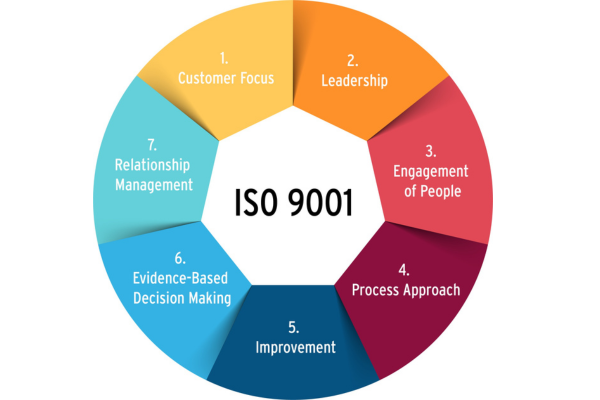
Key Principles of ISO 9001 Quality Management Systems
ISO 9001 is built around several core quality management principles:
1. Customer Focus
Understanding and meeting customer needs consistently.
2. Leadership
Strong leadership commitment to quality objectives and performance.
3. Engagement of People
Empowering employees to contribute to quality outcomes.
4. Process Approach
Managing activities as interrelated processes to improve efficiency.
5. Improvement
Continual improvement of systems, processes, and performance.
6. Evidence-Based Decision Making
Using data and analysis to guide decisions.
7. Relationship Management
Managing relationships with suppliers and partners effectively.
How ISO 9001 Improves Organizational Performance
ISO 9001 helps organizations move from informal practices to structured, measurable systems. Key performance benefits include:
- Clear roles, responsibilities, and workflows
- Reduced rework, delays, and inefficiencies
- Better risk management and decision-making
- Improved customer satisfaction and retention
By embedding quality into daily operations, organizations achieve more predictable and reliable outcomes.
Building Customer Trust Through ISO 9001
Customer trust is built on consistency, transparency, and reliability. ISO 9001 supports trust by:
- Demonstrating commitment to quality standards
- Ensuring consistent service or product delivery
- Providing mechanisms for handling customer feedback
- Supporting continual improvement based on customer needs
For many clients and partners, ISO 9001 certification is a clear indicator of organizational credibility.
Integrating ISO 9001 With Other Management Systems
ISO 9001 integrates seamlessly with:
- ISO 14001 Environmental Management Systems
- ISO 45001 Occupational Health & Safety Management Systems
An integrated management system strengthens governance, reduces duplication, and enhances overall organizational effectiveness.
Common Challenges in ISO 9001 Implementation
Organizations may encounter challenges such as:
- Resistance to process documentation
- Limited understanding of quality principles
- Poor data collection and analysis
- Inconsistent leadership commitment
Overcoming these challenges requires practical system design and continuous engagement.
Why a Practical, Performance-Focused Approach Matters
ISO 9001 should not be treated as a documentation exercise. Effective Quality Management Systems must:
- Reflect actual operations
- Support decision-making and performance improvement
- Deliver measurable value to the organization
A practical approach ensures ISO 9001 drives real improvement rather than administrative burden.
Conclusion: Strengthening Quality and Trust Through ISO 9001
ISO 9001 Quality Management Systems provide organizations in East Africa with a proven framework for improving performance, consistency, and customer trust. When implemented effectively, ISO 9001 supports operational excellence and long-term success.
Saladin Consulting Ltd supports organizations across East Africa by designing and implementing ISO 9001 Quality Management Systems that are practical, performance-driven, and aligned with organizational objectives. Through structured frameworks and continual improvement, Saladin helps organizations build credibility, enhance efficiency, and strengthen trust with customers and partners.
